Earnest Money in Real Estate: What Buyers Need to Know
- 5 days ago
- 5 min read
Earnest money can protect a buyer, strengthen an offer, and create risk if handled poorly. It is a small part of the purchase price, but it carries real weight.
What earnest money means
Earnest money is a good-faith deposit a buyer gives after a seller accepts an offer on a home. It shows the seller that the buyer is serious.
The money does not go straight to the seller in most transactions. It is usually held by a neutral third party, such as a title company, escrow company, real estate brokerage, or attorney, depending on the state and contract.
If the purchase closes, the earnest money is usually credited toward the buyer’s closing costs or down payment. It is not an extra fee. It is part of the money the buyer already plans to bring to the transaction.
The purpose is simple:
It gives the seller confidence to take the home off the market.
It gives the buyer time to complete inspections, financing, and other contract steps.
It gives both sides a clear process if the deal does not close.
Earnest money is not just a deposit. It is tied to the contract terms, deadlines, and contingencies.
How earnest money works
Earnest money usually comes due soon after the contract is signed. The purchase agreement will state the amount, the due date, and where the money must be delivered.
Common delivery methods include:
Wire transfer
Personal check
Cashier’s check
Electronic payment through an approved escrow platform
Buyers should never send funds based only on an email request. Wire fraud is a real risk in real estate. Always verify wiring instructions by calling a trusted phone number from the title company, escrow company, or agent.
Once deposited, the funds stay in escrow until closing or until the contract ends. If the sale closes, the settlement statement should show the earnest money as a credit to the buyer.
Typical earnest money amounts
Earnest money varies by market, price point, and competition.
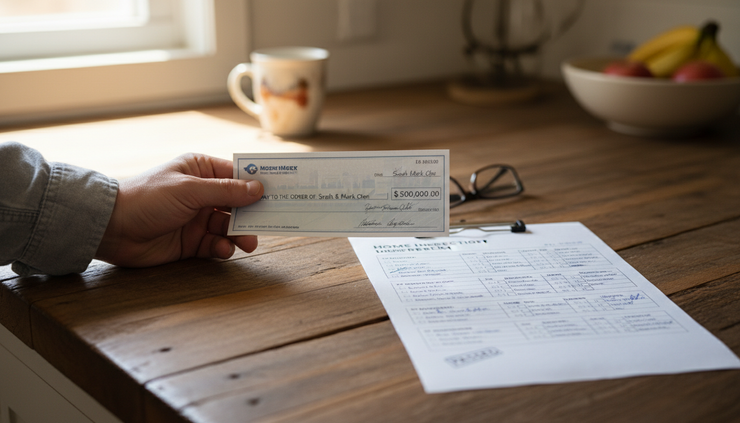
A common range is 1% to 3% of the purchase price. On a $400,000 home, that could mean $4,000 to $12,000. In some areas, buyers may offer a flat amount, such as $1,000, $2,500, or $5,000.
In a competitive market, a larger deposit can make an offer look stronger. Sellers may view it as proof that the buyer is less likely to walk away without a valid reason.
That does not mean a buyer should offer more than they can afford to risk. The right amount depends on:
Local market norms
The home’s price
Offer competition
Contract protections
Buyer comfort level
Advice from a real estate professional
A strong offer is not just about the deposit. Price, financing, inspection terms, closing date, and contingencies all matter.
When earnest money is refundable
Earnest money is usually refundable when the buyer follows the contract and cancels within a valid contingency period.
Common reasons a buyer may get earnest money back include the following.
Inspection contingency
The home inspection finds issues, and the buyer cancels within the inspection deadline.
Financing contingency
The buyer cannot get final loan approval, even after making a good-faith effort, and cancels within the required time.
Appraisal contingency
The home appraises for less than the purchase price, and the contract allows the buyer to cancel or renegotiate.
Title issues
A title problem appears, and the seller cannot resolve it as required by the contract.
Seller default
The seller fails to meet contract obligations, such as refusing to close or failing to deliver agreed repairs.
Refund rules come from the signed contract. State laws and local forms also affect the process. This article is for general information only and is not legal advice.

When earnest money can be at risk
A buyer may lose earnest money if they break the contract or miss key deadlines.
Common risk situations include:
Canceling after contingency deadlines pass
Failing to apply for financing as required
Ignoring document requests from the lender
Waiving contingencies without understanding the risk
Changing their mind without a contract-based reason
Missing the closing date without a valid excuse
Deadlines matter. A buyer might have a strong reason to cancel, but still lose leverage if they wait too long.
For example, if the inspection period ends on Friday and the buyer tries to cancel on Monday, the deposit may no longer be protected by that contingency. The exact outcome depends on the contract.
Tips for buyers handling earnest money
Treat earnest money like protected cash. The goal is to show commitment without creating needless risk.
Read the contract before sending funds
Confirm the amount, due date, escrow holder, and refund terms. Do not rely on a verbal summary.
Use a trusted escrow holder
Send money only to the party named in the contract or confirmed by your agent and closing team.
Get proof of deposit
Keep copies of receipts, checks, wire confirmations, and escrow notices.
Track every deadline
Put inspection, financing, appraisal, title, and closing dates on a calendar. Set reminders several days early.
Do not waive protections casually
Waiving inspection, appraisal, or financing contingencies can make an offer stronger. It can also put the deposit at risk.
Stay in close contact with the lender
Loan delays can threaten the closing. Respond fast to document requests.
Put changes in writing
If the seller agrees to extend a deadline or change terms, make sure it is signed in writing.
What buyers should ask before making an offer
Before agreeing to an earnest money amount, ask:
What is normal for this market?
Who will hold the money?
When is it due?
What contingencies protect the deposit?
What deadlines matter most?
What happens if the deal falls through?
How will the deposit appear at closing?
These questions can prevent confusion later.
FAQ
Is earnest money the same as a down payment?
No. Earnest money is a deposit made after the offer is accepted. If the sale closes, it usually gets credited toward the down payment or closing costs.
Who keeps the earnest money if the deal falls through?
The escrow holder keeps it until both sides agree on release or the contract process decides what happens. The result depends on the contract and the reason the deal ended.
Can a seller ask for more earnest money?
Yes. A seller can request more as part of negotiations. The buyer can accept, reject, or counter.
Is earnest money required?
Not always, but many sellers expect it. An offer with no earnest money may look weaker unless other terms make up for it.
How fast does earnest money need to be paid?
The contract controls the deadline. In many transactions, it is due within a few days after acceptance.

The main takeaway
Earnest money helps prove a buyer is serious. It also creates responsibility. The safest approach is to know the amount, meet every deadline, keep contingencies clear, and send funds only through verified channels.
For help preparing a strong offer and understanding deposit terms, contact Kim Foster’s Homes.